
When Should You Take Your Child to a Pediatrician?
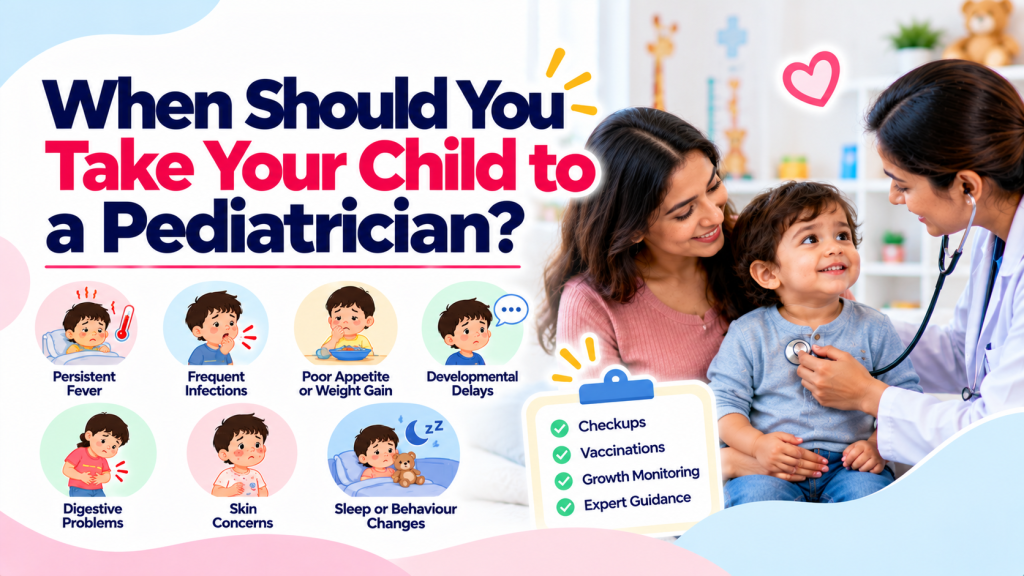
Regular pediatric visits help monitor your child’s growth, development and overall health. While minor illnesses are common during childhood, recognizing warning signs can help parents seek medical care at the right time.
Signs Your Child May Need a Pediatrician
Consider consulting a pediatrician if your child experiences:
– Persistent fever: Fever that continues, returns frequently or is accompanied by concerning symptoms.
– Frequent infections: Repeated illnesses, prolonged recovery or infections that seem unusually severe.
– Poor appetite or weight gain: Ongoing feeding difficulties or growth concerns.
– Developmental delays: Delays in speech, movement, communication or social interaction.
– Digestive problems: Persistent constipation, diarrhoea, vomiting or abdominal pain.
– Skin concerns: Persistent rashes, unexplained swelling or recurring skin infections.
– Sleep or behaviour changes: Ongoing sleep difficulties, unusual tiredness or significant changes in behaviour.
When Is Immediate Medical Attention Necessary?
Seek urgent medical care if your child has difficulty breathing, a seizure, severe dehydration, unusual difficulty waking, or other serious symptoms.
A baby younger than three months with a temperature of 38°C (100.4°F) or higher needs immediate medical assessment.
Why Are Regular Checkups Important?
Routine pediatric appointments help track height, weight, nutrition, developmental milestones and vaccination status. They also give parents an opportunity to discuss concerns before they become more serious.
How Often Should Children Visit a Pediatrician?
Visit schedules depend on your child’s age, health and vaccination needs. Babies generally require more frequent checkups during their first year, while older children need routine preventive visits and additional appointments when they become unwell.
Conclusion
Knowing when to consult a pediatrician helps parents make informed decisions about their child’s health. Do not ignore persistent symptoms, developmental concerns or sudden changes in behaviour. Early evaluation can help identify problems and ensure appropriate care.