High-Risk Pregnancy: Warning Signs You Should Never Ignore
A high-risk pregnancy means there may be a greater chance of complications affecting the mother, baby, or both. With regular prenatal care and appropriate monitoring, many women with high-risk pregnancies can have healthy outcomes.
What Can Make a Pregnancy High-Risk?
Several factors can increase pregnancy risks, including:
- High blood pressure or diabetes
- Previous pregnancy complications
- Multiple pregnancy, such as twins
- Placental problems
- Certain infections
- Existing medical conditions
- Pregnancy at an advanced maternal age
Warning Signs to Watch For
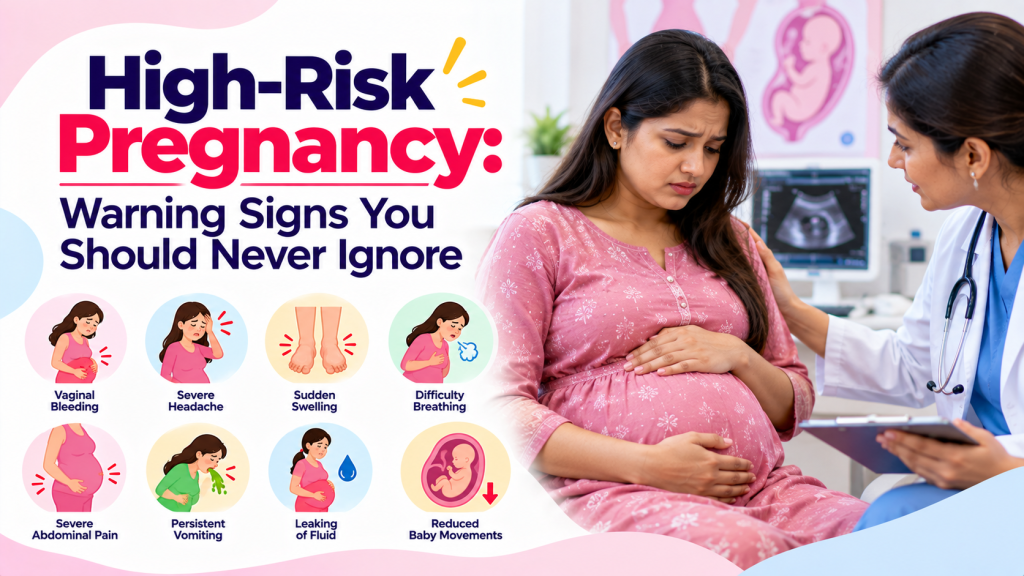
Pregnant women should seek medical advice promptly if they experience:
- Vaginal bleeding
- Severe or persistent abdominal pain
- Severe headache or vision changes
- Sudden swelling of the face or hands
- Difficulty breathing or chest pain
- Fever or feeling seriously unwell
- Severe or persistent vomiting
- Leaking of fluid from the vagina
- Reduced or noticeably changed baby movements later in pregnancy
Some symptoms can indicate conditions that require urgent assessment, so they should not be ignored.
Why Regular Checkups Matter
Regular prenatal appointments allow your gynecologist to monitor blood pressure, blood sugar, baby’s growth, fetal development and other aspects of pregnancy. Additional scans or tests may be recommended depending on your individual risk factors.
What Can You Do During a High-Risk Pregnancy?
Follow your doctor’s recommendations, attend scheduled appointments, take prescribed medicines as directed and maintain a balanced diet and healthy routine. Avoid self-medication and contact your healthcare provider if you notice new or worsening symptoms.
When Should You Seek Emergency Care?
Severe bleeding, severe abdominal pain, difficulty breathing, chest pain, seizures, loss of consciousness or other serious symptoms require urgent medical attention.
Conclusion
A high-risk pregnancy requires closer monitoring, but being classified as high-risk does not automatically mean that serious complications will occur. Knowing the warning signs and maintaining regular prenatal care can help identify problems early and support the health of both mother and baby.