
Menopause: Symptoms and Treatment Options
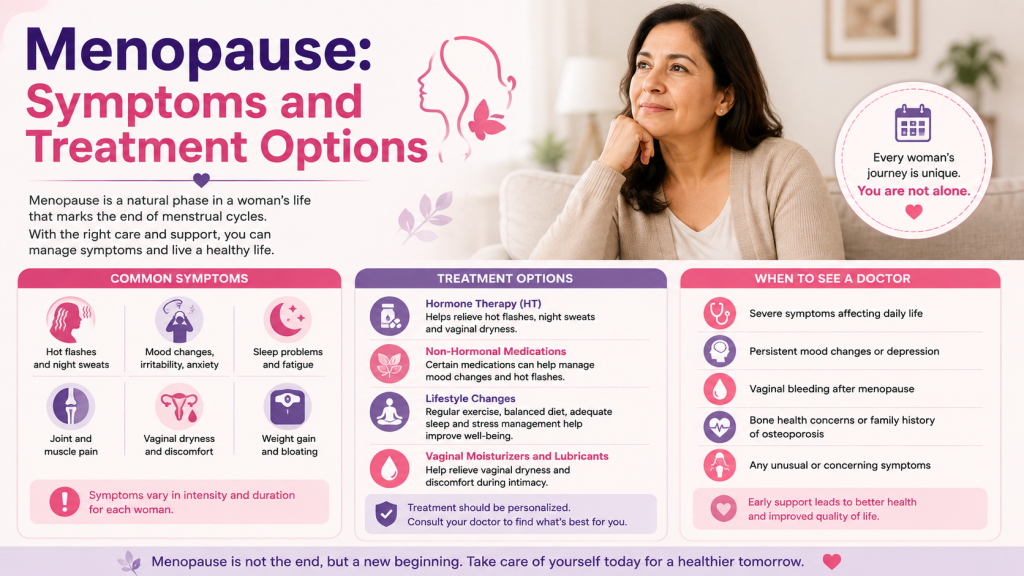
Menopause is a natural stage in a woman’s life when menstrual periods permanently stop. It usually occurs between the ages of 45 and 55, although the timing can vary. Hormonal changes during this stage may cause physical and emotional symptoms that can affect daily life.
Common Symptoms of Menopause
Menopause symptoms can vary from woman to woman. Common symptoms include:
- Hot flashes and night sweats
- Irregular periods before menopause
- Mood changes and irritability
- Sleep problems
- Vaginal dryness
- Joint and muscle discomfort
- Fatigue
- Changes in weight
Some women experience mild symptoms, while others may find them more disruptive.
What Causes Menopause Symptoms?
During menopause, the ovaries gradually produce less estrogen and progesterone. These hormonal changes can affect the menstrual cycle and lead to symptoms such as hot flashes, sleep difficulties and vaginal dryness.
Treatment Options for Menopause
Treatment depends on your symptoms, overall health and personal needs. Options may include lifestyle changes, non-hormonal medicines and hormone therapy when appropriate.
Regular exercise, a balanced diet, adequate sleep and stress management can also support overall health during menopause. Vaginal moisturizers and lubricants may help with vaginal dryness and discomfort.
When Should You See a Gynecologist?
Consult a gynecologist if menopause symptoms are significantly affecting your daily life, you experience persistent or unusual symptoms, or you have any vaginal bleeding after menopause. A doctor can assess your symptoms and recommend suitable treatment options.
Conclusion
Menopause is a natural transition, but you do not have to struggle with uncomfortable symptoms. With appropriate guidance, lifestyle changes and treatment when needed, women can manage menopause symptoms and maintain their health and quality of life.