
Normal Delivery vs C-Section: What Determines the Mode of Delivery?
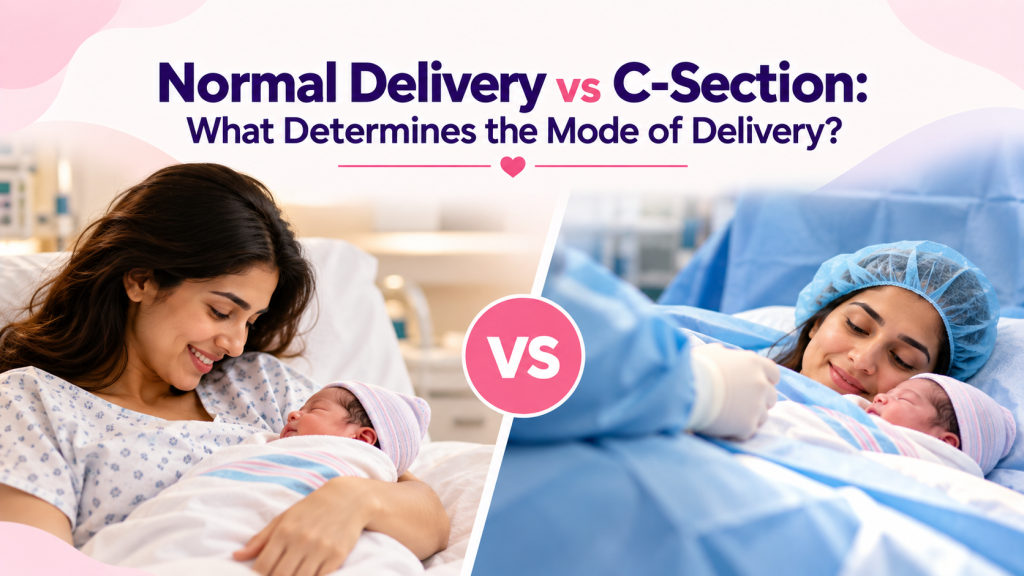
The mode of delivery is an important decision during pregnancy, but it is not always something that can be decided in advance. A vaginal delivery, often called a normal delivery, may be possible when the mother and baby are doing well. In some situations, a C-section (cesarean delivery) may be recommended when it is considered safer for the mother or baby.
What Is a Vaginal Delivery?
Vaginal delivery is when the baby is born through the birth canal. When pregnancy is progressing normally and there are no major complications, vaginal delivery may be planned.
Recovery after vaginal birth is often quicker than after major abdominal surgery, although every woman’s recovery is different.
What Is a C-Section?
A C-section is a surgical procedure in which the baby is delivered through an incision in the abdomen and uterus. It may be planned before labour or performed during labour if a medical situation develops.
A C-section can be an important and sometimes necessary option when vaginal delivery could pose a significant risk.
Factors That Determine the Mode of Delivery
Several factors may influence the decision, including:
Baby’s Position
If the baby is in a breech or another position that makes vaginal delivery difficult or unsafe, a C-section may be recommended depending on the circumstances.
Baby’s Health
Changes in the baby’s heart rate or other concerns during labour may require urgent delivery.
Placenta Position
Conditions such as placenta previa, where the placenta covers or is very close to the cervix, can affect the recommended mode of delivery.
Mother’s Health
Certain maternal conditions, including some cases of high blood pressure or other pregnancy complications, may influence the delivery plan.
Previous C-Section
Having had a previous C-section does not automatically mean that another C-section is required. Depending on individual circumstances, a vaginal birth after cesarean (VBAC) may be an option for some women.
Progress of Labour
If labour does not progress as expected despite appropriate management, the doctor may recommend a C-section.
Can You Choose Between Vaginal Delivery and C-Section?
The preferred mode of delivery depends on the health and circumstances of both mother and baby. Your obstetrician will consider factors such as pregnancy history, baby’s position, placental location, medical conditions and how labour progresses.
Conclusion
There is no single delivery method that is right for every pregnancy. Vaginal delivery and C-section both have benefits and potential risks, and the safest approach depends on individual circumstances.
Regular prenatal checkups allow your obstetrician to monitor your pregnancy and discuss the delivery plan with you. If you have questions about your delivery options, speak with your gynecologist or obstetrician for personalized guidance.